Wednesday, September 12, 2018

"What is this -- Blitz?"
- me after losing a 3.5 hour game on time.

Rough go of it tonight. Opening problems with the white pieces from the Scandinavian. I was too averse to moving the Queen so early in the game (see: 7. Bg5?!) but in hindsight it seems like what should have been done. CPU is running an analysis now.

game here:


Sam is a super enthusiastic chess player, and if I had to lose to someone tonight, I'm glad it was to him.

That said, the focus here will be on coping with the loss.

First, I'm fine with losing the opening this time, but never again. The last time I played a Scandinavian over the board was with a guy named Bob in Jacksonville, FL (R.I.P.) who took with the Queen. I've never seen this line and honestly, it wasn't until 11. ...Qa5 that it caught up to me. My objective takeaway here is that  after black's sixth move, Qd3 is called for (edit: CPU informs me later, Bd3 also works), but only because 10 moves later, doubling pawns on the c file will be required. I'm okay with not catching that earlier, but clearly it had some impact on my game.

Looking at the game now, I think I was too much an optimist about the ebb and flow of the position and initiative.  After 18. ...Rac8 for example, 19. Bb3 does deal w/ the threat, but perhaps something like 19. Qd4 is more advantageous. As I scroll through this game it does seem like more aggression could've been called for, although now that I look at 19. Na5 I do remember enjoying seeing it on that square, for obvs reasons, including my next move. That was part of my plan, but my plan was positional and I wonder if it should have been more... I dunno... Sith-like.


Originally, I felt that 20. Rac1 was the mistake that I should have avoided, as it allowed BxNf3 on the following move. In retrospect, I see that the Queen side pawns were not doubled as yet however. I suspect doubling pawns for the B/N trade is okay on one side of the board however, and I was alright with it at the time I assume as well. I was disappointed however, when my Queen trade calculations (one move deep?) came up short and placed my Queen side in the same state.


I feel like after move 25 my play was adequate for the next twenty or so moves. I worked the position and did the needful. It took a lot of effort - by move 40 I was at 23:17 and Sam was probably around 1:15:00. (I didn't actually write his time down at 40 as -- oof! no time!)


Evidence is starting to accumulate that I generally overestimate my chances in any position that I find myself in. Take a look: which side do you want to play?

(Nimzowitch's well-studied Klingon Pird-of-Prey formation was reached at move 39.*)

After 47.  Rc5 Sam talked me in to thinking we had a three-fold repetition, but I felt it was just a smidge too soon - and despite my position being weaker, I still didn't think he had any real chances aside from a sketchy King move that looked like it could get dicey for him. We talked about it, but neither of us were looking to draw. I felt with the clock as it was, and my pawns as they were, I would have to leave it to him to try and find an active move. If he tried to force it, with something like 47. ...Kf5 I thought it might give me chances. If he repeated again though, obviously, we'd have to shake hands.

As it turns out, I could not prove that 47. ...Kf5 was losing. At the time, I thought it was a courageous move on his part. I suspect that 48. Rbxb5 was the proper continuation afterward, however I didn't want to remove the threat of of Rxc7#. This was probably a mistake on my part..

For the first time in a tournament game I found myself with less than 5 minutes on the clock and stopped writing down my moves after move 60. Under time pressure, I remember making some questionable King moves in a K-P-R vs K-P-R endgame, that ultimately could have cost me the draw barring a mistake by my opponent even if I had not flagged before that happened - literally forgetting about the clock while pondering the position - the last time I looked at it was on the previous move and I had 26 seconds left. The beeping of the clock brought me back and all I could do was chuckle.

It was a fun game - I'm glad Sam didn't take the draw. My play needed to be sharper, particular in the following areas.

Key takeaways:

  • Wrecking pawn structures is a tactic. If one side of the board has doubled pawns, be careful that the other side does not end up with them too. 
  • When three or four pieces are touching (see opponents b7 complex after 18. ..Rac8) spend more time considering potential discoveries. (I calculated the discovered battery but not the BxNf3 move)
  • A potential Queen exchange is no place for lazy calculations.


Saturday, September 8, 2018

So enough about my games. Black to move in the position below.

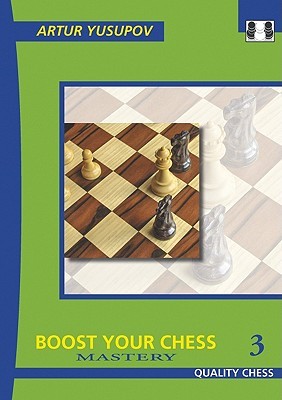
Yusupov has this as a test problem in Chapter 2 of Boost Your Chess - 3, and I found it the most interesting of the 12 problems.

To be fair, you should know that the theme here is "Realizing an Advantage" and the focus is on preventing counter play by your opponent. White has just moved the first rank rook to double the attack on the c5 square... and, per internet protocol I am obliged to type: YOU WON'T BELIEVE WHAT HAPPENS NEXT!


Thursday, September 6, 2018

Spent a few hours today in the MI chess room, and finished Chapter Two of Artur Yusupov's  BYC-3.  (Made the bare minimum passing score of 14 of a possible 29 points.)

A patron came in and sought a game. I agreed and asked if he minded that I would be writing the moves down (I'm recording my OTB games to study later). He introduced himself as Richard and was adamant that he would not allow that.

I asked him how long of a game he wanted - just trying to get a feel for how serious he wanted to play. His only response was that he would not play on a clock.

I am unclear as to why he was so against me recording our game, but as I realized tonight, my memory for games is coming back. Richard had the white pieces in our second game and liked to slam his pieces down as if every move were a decisive blow.


My moves here are not good; they are far too aggressive and rushed (8. ...g5 for example, met by 9. Qb5 is just losing) and I'm just pushing tactics here... the whole thing is just spaghetti thrown at a wall -  but Richard was having a hard time today at least. I tried to make the game a little friendlier, as he just seemed so unhappily intent on winning, and after 16. ...Nf5, when he made a follow up move like 17. e4 or 17. c3 (i forget which) I encouraged him to watch the fork at Nxg3! and he took back the move. He made a couple of more moves, again, still so serious, but then after 19. ...g4 , he made a couple of different moves with his Queen (after announcing so adamantly prior to our second game "TOUCH MOVE! - I forgot to say that last game!") only to place the Queen on e2, I reminded him of the fork and he resigned.
 

Some thoughts:
  • On principle, if someone asks me for a game, but then declines to even allow the game to be recorded, I will probably reconsider and just spend my time studying instead. 
  • "TOUCH MOVE!" as friendly pre-game banter is kind of an indicator of just how relaxed and enjoyable your opponent is going to be.
  • It may not make sense to take games from folks who won't be put on a clock.

Wednesday, September 5, 2018

"If we have an advantage, we must raise our level of concentration. If we can solve the next problems to arise, then the game may come to a quick end and we will not have to make any further effort!"        -Artur Yusopov

So, for a brief shining moment - I had an advantage.


I'll  write more on this later, but I'm much happier with my play tonight than I have been in a good while. Throughout the game, I was vigilant to always know what my plan was and to constantly evaluate the position on the board. Having no repertoire against d4 to speak of, most of the opening was just winging it, and despite the smallish center, I was happy with where all my pieces developed. I locked down d5 early, even if it came at the expense of most of the other central squares.

Shortcomings during the game were as follows:
  • Early, assessing the pieces and pawns was done with regularity, and I always knew what was guarded or only guarded once, etc. As the game progressed, I spent less time with that. I should be more vigilant looking for targets, even into the late middlegame and beyond.
  • There was a blunder w/ 36. ...Qc5 which cost me that half of the full point. I was making moves with no internal delay - just jerking the piece to its new square as soon as I felt good about it. It would be a good idea, the next time I think to myself "this is a won position" if all moves, once decided, are then delayed by sitting on my hands for ten seconds or so. Everything feels like the right square when you're winning. 
  • Not knowing what is and isn't up with Bishops of opposite colors... That is literally the very next chapter in Silman's Endgame Course.
 Strong points of the game:
  • Stayed fluid before hand by just not looking up who I was playing, or even considering the Opening at all.
  • 29) ...Rxd4 was a moment that happened looking for active play, even though the 'material math' didn't immediately work out for me. Exchanging the rook for the bishop still seems like the right move and in this game at least, it decimated white's center and led to my advantage. This is not a move I would have played two or three weeks ago. 
  • 33. ..b4  I am learning: passed pawns are made to be pushed.
  • Adding and maintaining a strategy component to this game made it more enjoyable.  
The bottom line is that I drew a game I should have won, but that I like the way I'm playing now, much better than I was playing a month ago.  Rome ne s'est pas faite en un jour.

Sunday, September 2, 2018

Ce n'est pas la défense sicilienne

"Tactics is what is used in a game where there is something to be done, and strategy is what is used when there is nothing to be done."


In advance of round three, I researched my opponent and found that as black, he consistently opts for a French Defense.  Not playing against the French often, I have occasionally ended up in an 'advanced' configuration and always found the black pawn on c4 to be annoying. I picked up a copy of MCO-14 a few days before the game and went through some options in a Tarrasch variation (C03) that respond to an off-beat 3) ...a6 line my opponent seemed fond of and which did not allow the black c pawn to reach the fourth rank. Having committed a few lines to memory, I felt I'd at least be able to get out of the opening with material and positional equality. That much was achieved.

The remainder of this game is illustrative of my second biggest* problem in chess: failing to come up with a strategy.


The first nine moves are basically on auto-pilot and getting through the opening. With move 10 however, I was essentially looking to develop my remaining pieces, but did not bother with working on a plan that might help me determine perhaps where the dark-squared bishop or the Rook on the a file might go.

As such, I feel that 10. Be3 was a mistake. Long term, the bishop is better suited along the a1-h8 diagonal and would dominate my opponent's dark squared bishop on e7. From e3 though, the piece can face some complications getting on to the right diagonal. After two pawn moves (a3 and b4) Bb2 might have been a nice approach, but also interesting to me is Bg5 immediately, looking to weaken the King's pawns with an h6 before going to d2, preparing for c3.

Some moves later, after the fianchetto of Black's light-squared bishop, I did not consider the move 13. Bd4 which was probably the right move here. Again, I still had not worked out any notion of what I want the pieces to do. I am playing the middle-game here as if it were an opening - hoping for a bad move from my opponent that may let me snag a pawn or a piece, and then trade down into an endgame, material-up. Given a plan, I feel I might have found Bd4. Instead, my Knight on e4, even though slightly better than my opponent's Knight on f6, was traded off in an exchange that improved my opponent's other Knight, which was otherwise limiting his Queen's effectiveness on d7.

It is worth noting here what I think some of the plans/strategies should have been. Moves 10 through 16 on my part should have been aiming long range pieces against the black king and perhaps getting the Bishop or Knight on g5. Provoking some kind of a response in the Black King's position would have been more advantageous than just trying to 'stay solid' and waiting out a mistake that I might be able to capitalize on.

After the pointless move 16 R(a)c1?! however, the only plan is to just avoid the coming assault on the white King. So many bad moves were made in the service of avoiding a simple exchange of light-squared bishops, moves that ultimately weakened my King's pawn structure. In retrospect, the only reason I did not trade Bishops on moves 17 or 18 was to open the c-file, an idea that was really cool before the Queen left the file a while ago.

The collapse that followed isn't worth writing about, but 31) Nxg1?! was a particularly bad move and an idea that I should dwell on. White is already in trouble, but restricting the king, moving the Knight back to its starting square, all while simultaneously removing the only supporting piece to allow your rook to challenge for the seventh rank was quite an accomplishment. The rest, as they say is history, and I resigned rather than playing it out.

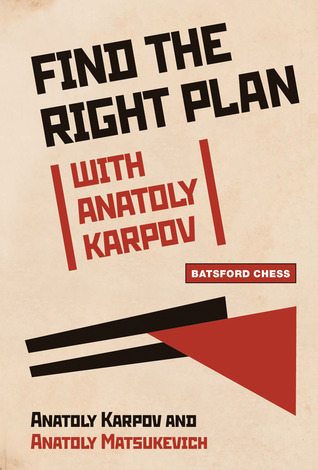
David thoroughly outplayed me in the game, and as a result of how the game played out it provided the motivation to get serious about this weakness in avoiding strategies during my games and hoping instead that my opponents would make tactical blunders that allow me to win. With that in mind, I checked out the following books. Reviews of each should be on my Goodreads account or perhaps, posted here, in time.


Key Lessons from this game:

  • Relying on tactics and hoping for blunders is an inadequate strategy. I need to focus on making concrete plans.
  • Rooks belong on open or semi-open files... or files that are likely to open. In this entire game I only made one good rook move (9. Re1). All other rook moves placed them on files contingent to open at my opponent's discretion.


*my biggest problem seems to be getting checkmated

Wednesday, August 29, 2018

Playing Catch-Up

A month ago I decided to study chess more actively and improve my play. I began working through the copy of Silman's Complete Endgame Course with the idea that the endgame was historically the weakest part of my game and would yield the most results. Arbitrary goals were established and a week or two later, I joined a strong chess club (The Mechanics Institute in San Francisco) in the hopes of playing against a more serious class of players in long time control games, immediately joining a Tuesday Night Marathon Tournament that had begun the week prior.

Since then, I've played two tournament games and took a bye last night due to catching a short but fierce cold. My first game is below, against Glenn McEnroe.


 2) c3 is a move I don't believe I've ever seen before, and I'll admit that it threw me. I had heard of Anti-Sicilians before, and just assumed this must be that. Knowing no lines I simply set the goal of establishing a small center with pieces in line with a Najdorf style opening and would see where the game went.


13) ...Bd3 was my first break. Immediately I knew this was trouble for white, and quickly worked out an approach to pile up and win the d4 pawn. "The d4 pawn" at this point was my plan; Non-specific and amorphous, just the idea of an advantage. I wanted to work toward an endgame and reckoned that just the fact of the d pawn was enough to eek out an endgame victory.

After using the next few moves to liquidate pieces and get closer to an endgame, my first real failure, I think, came with 20) ...Qd7. Much more aggressive would have been to push the pawn to d4, and only then piling up on it. The only solace from the move was that it wasn't as bad as the next move 21) ...Rc8, which solved the problem of what to do with the d pawn altogether.  Just a colossally ridiculous set of moves on my part, frankly.

We entered an endgame, Glenn was able to isolate my pawns, but I was fairly sure I could always get a draw due to the rook pawns w/ ideas to trap White's King if he ever took on the a file. This was Silman's handiwork at play... a confidence that at least I had that in my pocket -- probably. While white was trying to do something Queenside, I was making a play with the pawns Kingside in what I was hoping would be a brilliant and dastardly onslaught resulting in promotion and the win. Finally, upon 43) Ka8, I prepared to push the g pawn, when it occurred to me that after 43 ...g3 44) f3, suddenly I am in jeopardy of being put into opposition. I was not thinking of Kb6, because White can sacrifice that pawn to get the edge in the race to the pawns, and white's h pawn would be all that would remain, soon to be a Queen. A draw was offered, I asked to play a move more, just to see what his next move might be, and then we split the point.

Key lessons from this game for me:
  • Push the passed pawn.  I didn't push the pawn on move 20 because it seemed too committal. Passed pawns should be pushed and that pawn should have gone to a dark square to negate the bishop. Not doing so was a mistake; the cause of the mistake was a fear of sending it so far beyond the wall.
  • Stop wasting moves. There were two moves in this game that were frivolous. 28) ...g6 and 35) ...Kc6. The first was just to stall, the second was to make me feel better about being closer to the a file, when neither served any use.
  • Lastly, most importantly, focus on the threats. After 20) Qc5, there were two pieces attacking d5 and rather than focus on that, I just assumed there could be some tactics after the Bishop took, rather than looking at Occam's move, Qxd5 -- winning the pawn with or without any ensuing exchange.