"Tactics is what is used in a game where there is something to be done, and strategy is what is used when there is nothing to be done."
In advance of round three, I researched my opponent and found that as black, he consistently opts for a French Defense. Not playing against the French often, I have occasionally ended up in an 'advanced' configuration and always found the black pawn on c4 to be annoying. I picked up a copy of MCO-14 a few days before the game and went through some options in a Tarrasch variation (C03) that respond to an off-beat 3) ...a6 line my opponent seemed fond of and which did not allow the black c pawn to reach the fourth rank. Having committed a few lines to memory, I felt I'd at least be able to get out of the opening with material and positional equality. That much was achieved.
The remainder of this game is illustrative of my second biggest* problem in chess: failing to come up with a strategy.
The first nine moves are basically on auto-pilot and getting through the opening. With move 10 however, I was essentially looking to develop my remaining pieces, but did not bother with working on a plan that might help me determine perhaps where the dark-squared bishop or the Rook on the a file might go.
As such, I feel that 10. Be3 was a mistake. Long term, the bishop is better suited along the a1-h8 diagonal and would dominate my opponent's dark squared bishop on e7. From e3 though, the piece can face some complications getting on to the right diagonal. After two pawn moves (a3 and b4) Bb2 might have been a nice approach, but also interesting to me is Bg5 immediately, looking to weaken the King's pawns with an h6 before going to d2, preparing for c3.
Some moves later, after the fianchetto of Black's light-squared bishop, I did not consider the move 13. Bd4 which was probably the right move here. Again, I still had not worked out any notion of what I want the pieces to do. I am playing the middle-game here as if it were an opening - hoping for a bad move from my opponent that may let me snag a pawn or a piece, and then trade down into an endgame, material-up. Given a plan, I feel I might have found Bd4. Instead, my Knight on e4, even though slightly better than my opponent's Knight on f6, was traded off in an exchange that improved my opponent's other Knight, which was otherwise limiting his Queen's effectiveness on d7.
It is worth noting here what I think some of the plans/strategies should have been. Moves 10 through 16 on my part should have been aiming long range pieces against the black king and perhaps getting the Bishop or Knight on g5. Provoking some kind of a response in the Black King's position would have been more advantageous than just trying to 'stay solid' and waiting out a mistake that I might be able to capitalize on.
After the pointless move 16 R(a)c1?! however, the only plan is to just avoid the coming assault on the white King. So many bad moves were made in the service of avoiding a simple exchange of light-squared bishops, moves that ultimately weakened my King's pawn structure. In retrospect, the only reason I did not trade Bishops on moves 17 or 18 was to open the c-file, an idea that was really cool before the Queen left the file a while ago.
The collapse that followed isn't worth writing about, but 31) Nxg1?! was a particularly bad move and an idea that I should dwell on. White is already in trouble, but restricting the king, moving the Knight back to its starting square, all while simultaneously removing the only supporting piece to allow your rook to challenge for the seventh rank was quite an accomplishment. The rest, as they say is history, and I resigned rather than playing it out.
David thoroughly outplayed me in the game, and as a result of how the game played out it provided the motivation to get serious about this weakness in avoiding strategies during my games and hoping instead that my opponents would make tactical blunders that allow me to win. With that in mind, I checked out the following books. Reviews of each should be on my Goodreads account or perhaps, posted here, in time.
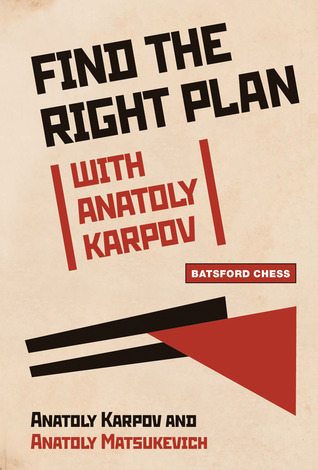
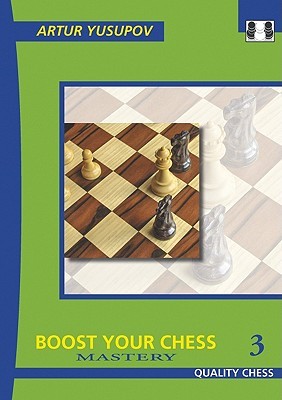
Key Lessons from this game:
- Relying on tactics and hoping for blunders is an inadequate strategy. I need to focus on making concrete plans.
- Rooks belong on open or semi-open files... or files that are likely to open. In this entire game I only made one good rook move (9. Re1). All other rook moves placed them on files contingent to open at my opponent's discretion.
*my biggest problem seems to be getting checkmated

No comments:
Post a Comment